
The global electric vehicle market is expanding rapidly, and EV charging infrastructure has become one of the most certain growth tracks in the energy transition. This represents one of the most promising business opportunities today. For local electrical engineering companies, new energy companies, traders, and investors, becoming an EV charger distributor means entering a long-term, high-frequency industry with clear policy support. This article will systematically outline how to become an EV charger distributor, covering market drivers, distributor types, key steps, qualification requirements, manufacturer support, and common challenges.
Why Become an EV Charger Distributor?
1. Explosive Growth in the Global Electric Vehicle Market
Electric vehicle penetration rates continue to rise in major global markets, with passenger cars, commercial vehicles, and public transportation all accelerating their electrification transition. Electric vehicle sales in Europe, North America, Southeast Asia, the Middle East, and Latin America are maintaining rapid growth. Namun, in most regional markets, the deployment of EV charging stations still lags far behind the growth rate of electric vehicles. This imbalance between vehicles and charging stations indicates a clear demand gap for EV charging equipment. This leaves a significant supply gap for distributors.
2. Government Demand for Electric Public Transportation
Many countries are promoting the electrification of public sector vehicles such as buses, taxis, ride-hailing vehicles, government fleets, and postal logistics vehicles. Public charging networks, bus depot charging stations, overnight AC slow charging stations, and fast charging facilities for commercial vehicles are becoming important municipal infrastructure projects. Distributors with local resources have a greater chance of securing these projects. This will create continuous procurement, installation, and operation and maintenance needs for local dealers.
3. Global Environmental Protection Trends
With severe weather increasing globally each year, carbon emissions are a significant concern, with the transportation sector accounting for a large proportion of carbon emissions. Consequently, an increasing number of countries have announced plans to phase out gasoline-powered vehicles. Furthermore, subsidies, tax breaks, and construction grants have been introduced to support electric vehicle charging infrastructure. These policy benefits will continue to stimulate market demand over the next decade, ensuring the long-term stable development of the electric vehicle charging business.
4. War Drives Up Oil Prices
Geopolitical tensions and energy supply fluctuations have led to multiple increases in oil prices, significantly raising operating costs for individual users and fleet operators of gasoline-powered vehicles. Sebaliknya, the lower energy cost per kilometer for electric vehicles has accelerated the electrification of the automotive industry. This combination has driven strong demand for EV charger.
5. Other
In addition to the factors mentioned above, the rise of electrification in ride-hailing services, the widespread adoption of home electric vehicle charging, and the continued decline in battery costs all support the long-term prosperity of the electric vehicle charging station market. For distributors, this business is characterized by continuous revenue from after-sales service, upgrades, and maintenance, rather than one-off product sales.
What types of EV charger distributors are there?
If you plan to become an EV charger distributor, selecting the right product mix based on your target market is paramount. TKT offers the following three most common product portfolios:
1. AC Electric Vehicle Chargers for Home and Small Businesses
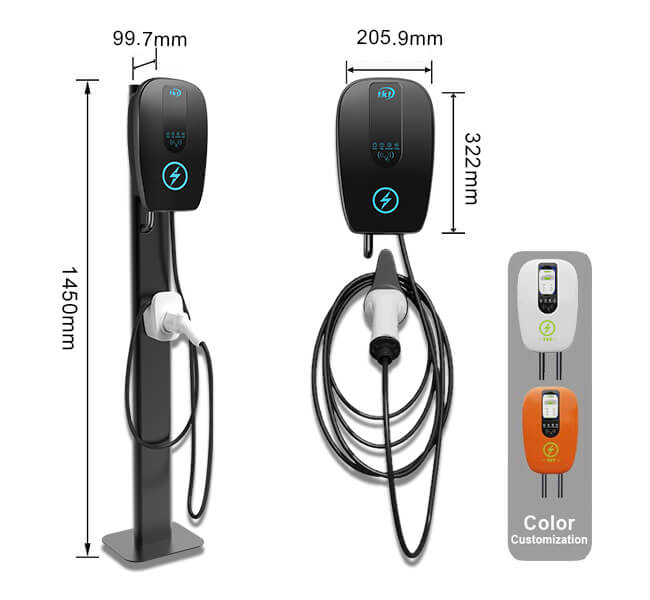
AC chargers are entry-level products, primarily offering 7kW, 11kW, and 22kW power outputs. These chargers are mainly used in homes, apartments, guesthouses, small offices, and for overnight charging of vehicles. They offer advantages such as low unit price, easy installation, and high market demand, making them suitable for distributors focused on retail and residential projects.
TKT AC electric vehicle charger series uses high-quality raw materials from well-known brands, ensuring reliable performance and low maintenance costs.
2. Small DC Electric Vehicle Chargers for Office and Commercial Locations
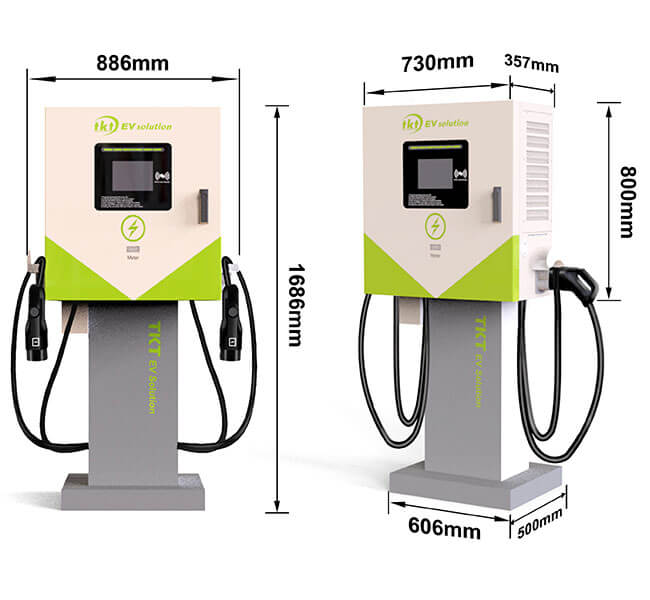
These products have upgraded from AC to DC charging, offering faster charging speeds and typically ranging from 30kW to 60kW. They are suitable for shopping malls, hotel, office buildings, small fleets of vehicles, and medium-sized parking lots. Small DC charging stations offer faster charging speeds than AC charging stations without the stringent requirements for power grids and site conditions associated with large EV fast charging stations. Balancing charging efficiency and investment costs, they are a core growth product in commercial charging.
TKT WallBox DC electric vehicle charger falls into this category. It features a compact design and stable operation.
3. Large Commercial and Fast DC Electric Vehicle Chargers
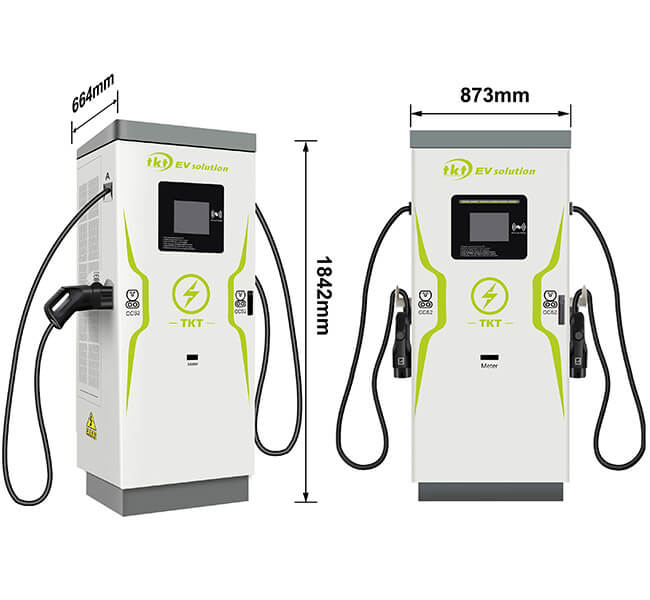
Higher-power large DC fast chargers are designed for public charging stations, bus fleets, logistics parks, and heavy commercial applications. Power outputs range from 120kW, 160kW, 240kW, and even higher. These projects typically involve civil engineering, power capacity expansion, back-end operation platforms, and local after-sales service. They offer greater profit margins but also require higher levels of capital, qualifications, and technical capabilities from distributors.
TKT currently supports a maximum charging power of 320kW and is developing new products with plans to increase it to 480kW. Interested parties are welcome to inquire.
Key Steps to Becoming an EV Charger Distributor
1. Thoroughly Understand Your Local Market
Entering any new market requires a thorough understanding. Otherwise, any investment will end in failure. The same applies to charging stations. Karena itu, you need to research your local electric vehicle fleet, mainstream vehicle interface standards, charging prices, government subsidies, certification requirements, competitive landscape, and power conditions.
Misalnya, regarding the simplest charging interface standards, Europe primarily uses Type 2 and CCS2, North America primarily uses Type 1 and CCS1, and some Asian markets use CHAdeMO or GB/T. Understanding standards is a prerequisite for product selection. Clear local vehicle information can prevent you from blindly choosing products and positioning in the market.
2. Choose a suitable niche market and business model
Whether it’s retailing and wholesaling home AC charging piles, selling small commercial DC charging piles, or participating in the construction of public fast charging stations, there are significant profit margins if you do thorough research. Namun, different models have different requirements for capital, team, installation capabilities, and customer resources. Please make your decisions based on your available resources. Don’t blindly focus solely on profit margins. It’s recommended to start with a niche market initially, and then gradually expand as you gain a better understanding of the product and market.
Because different product types target different customer structures, their core needs and services are different. It’s tantamount to starting a completely new project. Avoid blindly expanding.
3. Establish partnerships with reliable EV charger manufacturers
Your suppliers determine the competitiveness of your products and after-sales risks. When selecting a manufacturer, focus on evaluating: whether they have complete CE certifications, whether their quality control is stable, whether their delivery cycle is controllable, whether they support OEM/ODM, and whether they can provide technical training and after-sales support.
Misalnya, TKT is a reputable Chinese electric vehicle charger manufacturer. Its products currently hold international certifications such as CE and are recognized by Fortune 500 perusahaan. It is already a designated supplier for Fortune 500 companies such as BYD and Olectra.
4. Establish your operations, sales, and after-sales systems
This includes a sales team responsible for customer development and project coordination, a technical team responsible for installation guidance and on-site support, and an after-sales service system responsible for daily maintenance and troubleshooting. EV chargers are electrical equipment; stable operation and rapid after-sales service directly impact customer repeat purchases and channel reputation. A comprehensive service system is a dealer’s core competitiveness in the local market.
Of course, we will provide more professional technical support, including remote debugging, remote core upgrades, dan banyak lagi.
Requirements for Becoming an EV Charger Distributor
To ensure a win-win situation and long-term cooperation, TKT sets forth the following requirements for partners interested in becoming EV charger distributors:
① Your business primarily operates in the domestic electrical and new energy industries, and you are capable of obtaining relevant product certifications in those countries.
Reason: EV charging stations involve electrical safety and grid connection requirements, and many countries have local certification or licensing requirements. If your company has a background in the electrical or new energy industry, you can better understand local safety regulations and certification processes, thereby efficiently completing market access and reducing compliance risks. This also facilitates more professional communication with end customers.
Our products have passed CE, ARAI, and other certifications. We can provide detailed information to assist you in obtaining certifications and licenses in your country. Because many countries have certain requirements for the certification body, we cannot apply for them ourselves.
② Your company possesses bulk purchasing and marketing capabilities.
Reasons: Bulk purchasing ensures stable supply, optimized production scheduling, and competitive pricing from manufacturers. Serentak, local marketing is crucial for rapidly increasing brand awareness and expanding the customer base. Distributors with strong market execution capabilities can capture market share more quickly and achieve win-win growth with manufacturers.
If you require customized branding, we can provide white-label products to meet your specific needs.
③ Provide local after-sales service and technical support to end customers.
Reason: Electric vehicle charging stations require professional installation, commissioning, and regular maintenance, including software upgrades, fault diagnosis, and parts replacement. Localized after-sales capabilities are a key factor for end customers, contractors, and operators when choosing distributors. Distributors who can provide on-site support and troubleshooting will gain higher customer loyalty and more repeat orders.
We will provide comprehensive remote support, including but not limited to remote software upgrades, remote fault code diagnosis, and remote video conferencing.
④ Your company possesses sufficient funds and a long-term development plan.
Reason: The electric vehicle charging industry is a long-term growth sector, with projects typically having long cycles rather than short-term business. Dealers need funds for inventory preparation, market expansion, team building, and project advance payments. Karena itu, sufficient funds are essential to ensure stable supply and project progress. A clear long-term development plan ensures that both parties invest resources in cultivating the local market deeply, rather than sacrificing service quality for short-term profits.
TKT Support for EV Charger Distributors
For companies planning to become an EV charger distributor, choosing a manufacturer with experience in product development, manufacturing, and export is crucial. TKT has focused on EV charging equipment for over 10 bertahun-tahun, providing comprehensive support and solutions covering residential, commercial, and public scenarios. Furthermore, TKT supports OEM/ODM customization solutions. Karena itu, it can assist distributors in resolving various issues for their customers.
① High-quality, cost-effective electric vehicle chargers that meet international standards
TKT offers a full range of DC chargers, AC chargers, and portable chargers, with power ranging from 7kW to 320kW. Future new products are planned to reach 480kW. All our products use raw materials from well-known brands, ensuring stable and safe performance with low failure rates and minimal after-sales issues. Frequent after-sales problems severely impact a distributor’s actual costs and reputation. This is crucial for establishing long-term, stable partnerships. Simply pursuing low prices is highly undesirable.
② Professional Technical Team Provides Installation Guidance, Troubleshooting, and Training
TKT boasts a team of experienced and highly qualified engineers. Karena itu, TKT can provide distributors with product installation guidance, debugging, common troubleshooting, and remote technical support. This significantly reduces the after-sales burden on local teams.
We also regularly provide distributors with comprehensive technical training, enabling them to resolve minor customer issues more quickly, shorten response times, and thus minimize losses due to customers being unable to charge their devices on time.
③ OEM/ODM Customization, Brand Packaging, and Marketing Material Support
TKT offers complete OEM/ODM services to meet clients’ customization needs, including product feature customization, appearance design, and brand packaging. We also provide standardized marketing materials and product manuals to help distributors establish local brands faster and conduct sales and promotional activities more efficiently.
④ Regional Price Protection and Distributor Profit Margin Guarantee
TKT prioritizes channel health and implements a strict regional price protection policy to prevent cutthroat price competition among distributors. We will set reasonable profit margins and a transparent pricing system to ensure that distributors enjoy high-quality service while obtaining stable and substantial profits.
Summary
Becoming an EV charger distributor means embracing a decade-long growth trajectory driven by vehicle electrification, policy support, and the energy transition. Market demand is clear, and the business model is mature, but success depends on precise market positioning, a robust operational system, Dan, most importantly, choosing a reliable manufacturer partner.
Ditemukan di 1998 and headquartered in Henan, Cina, TKT Group is a leading manufacturer and supplier of electric vehicle thermal control systems and charging systems. Dengan berakhir 8,200 square meters of factory space, more than 50 professional engineers, dan berakhir 300 experienced employees, TKT is a trusted partner of global automakers such as BYD, Tata Motor, Marco Polo, Daewoo, isuzu, Yutong, Ganti Mobilitas, Neoplan, and CAT.
TKT adheres to the philosophy of “treating every product with care and every customer with sincerity.” If you are preparing to enter the electric vehicle charger distribution business, TKT will be a trustworthy long-term partner.
Contact us today to get the charging station solution best suited to your needs.
Browse more news: EV Charger Manufacturers Warn You to Beware of Traps, How Much Does A Commercial EV Charging Station Cost? Best Certified EV Charger Manufacturers in India for Bulk Orders.
Facebook: https://www.facebook.com/TKTHVAC/
Linkedin: https://www.linkedin.com/company/tkt-hvac
Youtube: https://www.youtube.com/@TKTHVAC