
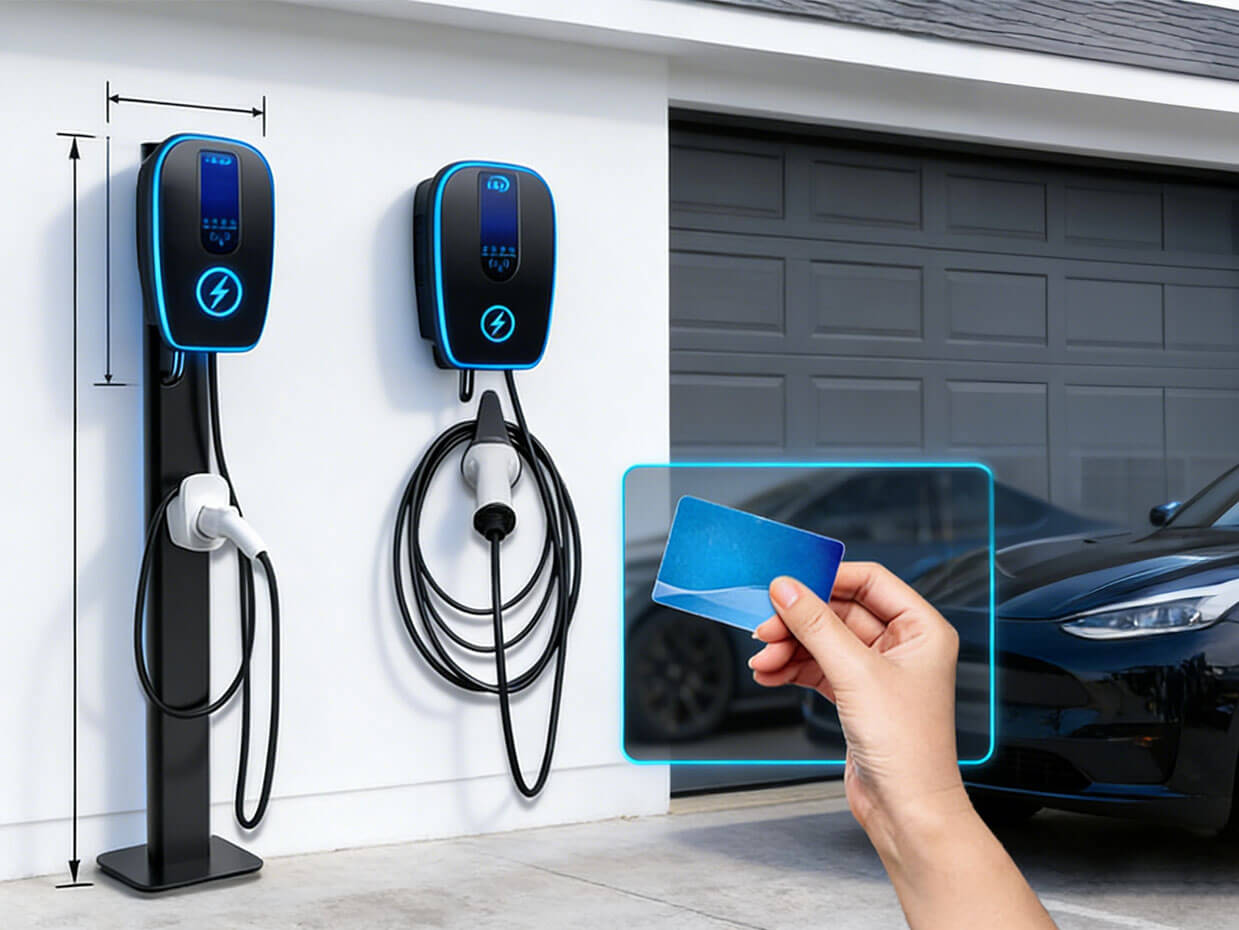
With the increasing number of electric vehicles on the streets, just like mobile phones need chargers, electric vehicles also require dedicated charging equipment. The EV home charger is a device specifically designed for charging electric vehicles at home, and is currently the most mainstream and convenient charging option for electric vehicle owners. Below, we’ll explain the core knowledge about them in simple terms that everyone can understand.
Why Choose EV Home Charger?
1. Convenience: Charge as soon as you get home, avoiding frequent queues at public charging stations.
2. Cost Advantage: The long-term unit price is usually lower than public fast chargers/DC fast chargers, especially when combined with off-peak electricity prices at night or home solar panels, resulting in more significant energy savings.
3. Flexible Installation: Wall-mounted or pole-mounted, supporting home parking spaces, garages, or community parking spaces.
4. Weather Resistance and Safety: IP65 protection and multiple electrical protections enhance outdoor and home safety.
Can you charge an EV at home? Is it cheaper to charge EV at home?
1. Yes, you can absolutely charge at home.
Almost all electric vehicles can be charged with a dedicated EV home charger. This device is designed for home use and can be installed in your own garage or a designated parking space in your community. The only requirement is that a qualified electrician must install it to ensure proper wiring, grounding, and safety configuration. No complex modifications to your home’s electrical system are needed. You can simply “plug it in and charge” when you get home.
2. Charging at home is significantly cheaper than at public charging stations.
This is one of the biggest advantages of home chargers. Let’s take China as an example and compare the numbers:
2.1 Public charging stations charge for both electricity and service fees, totaling approximately 1.2-1.8 yuan per kwh.
2.2 Charging at home only requires paying your residential electricity bill. Especially during off-peak hours at night, the price can be as low as 0.35-0.5 yuan per kwh, with no additional service fees.
예를 들어, a typical household electric vehicle uses about 15 kwh of electricity to travel 100 킬로미터. Charging at home costs only 5-7.5 yuan for the same distance; charging at a public charging station costs 18-27 yuan. Over the long term, this can save a significant amount on travel expenses. If your home has solar photovoltaic panels, the charging cost can be even lower.
Can an EV home charger be outside? Does EV charger increase home value?
1. Absolutely yes, it can be installed outdoors; it’s rainproof, dustproof, and durable.
Many people worry that outdoor installation will damage it due to rain or dust, but there’s no need to worry. Reputable home chargers for electric vehicles have an IP65 protection rating. Simply put, it completely blocks dust and can withstand water spray from any direction; rain and wind won’t damage it.
Furthermore, good products are treated for rust prevention, sun protection, and flame retardancy, so you can install them safely in outdoor parking spaces in your community or in your own yard. Installation is also flexible. It can be wall-mounted or built as a standing pole. 하지만, even if the device is waterproof, a professional electrician must ensure proper grounding, lightning protection, and waterproofing of the wiring, while also complying with the regulations of the property management and the local power company.
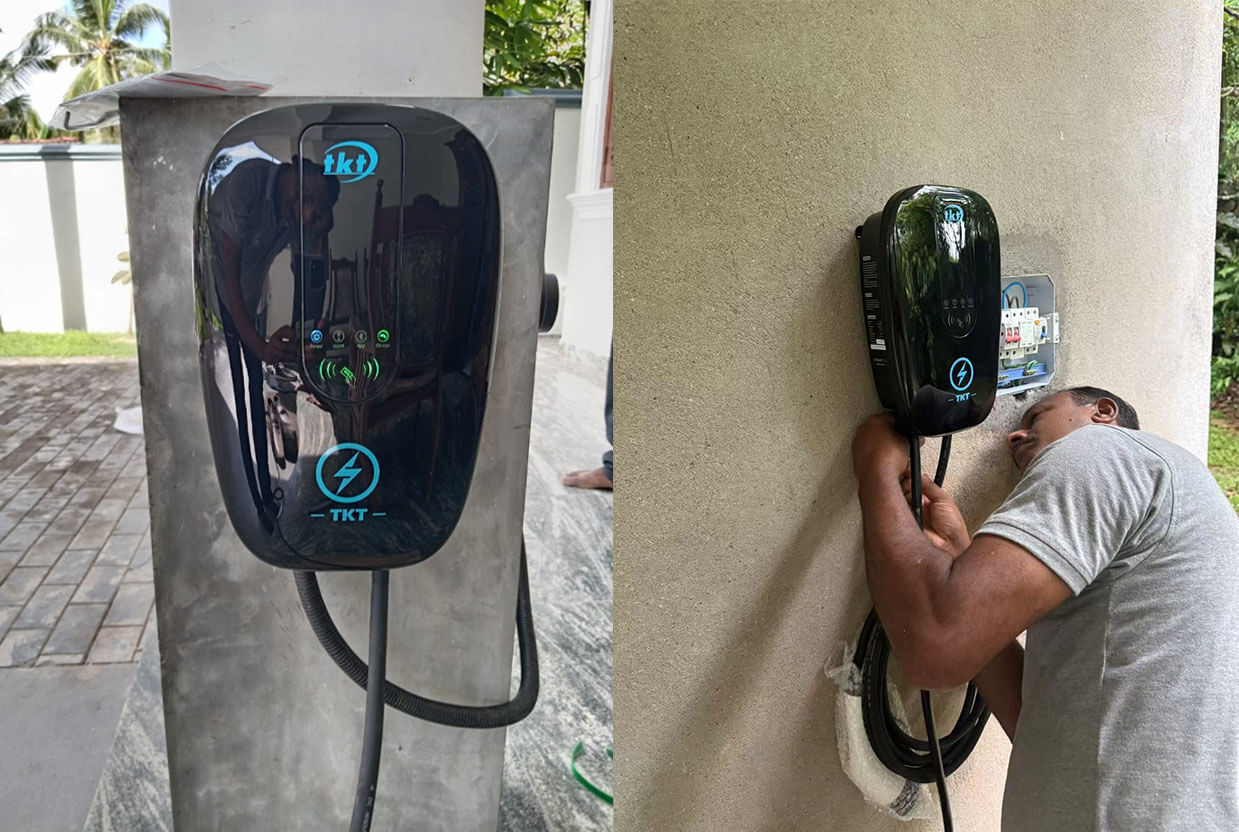
2. A house with a pre-installed home charger will be easier to sell and more competitive.
With the increasing number of electric vehicle buyers, for electric vehicle owners looking to buy a house, a house that comes with a pre-installed home charger is a significant advantage, saving them the time and expense of installation.
While it may not directly increase the house’s selling price dramatically, it can make the sale faster and give it a competitive edge compared to other properties in the same neighborhood. This advantage is particularly pronounced in first- and second-tier cities where electric vehicles are more prevalent. In the long run, as the number of electric vehicles increases, the value of this feature will also rise.
How long to charge EV at home? What power charger should I choose?
The mainstream power specification for EV home chargers is 7kW.
The first choice for home use, the most practical and cost-effective. It can be installed using a standard 220V single-phase power supply. You only need to provide a dedicated 32A line. Just like a high-powered air conditioner needs its own dedicated line.
1. Charging speed: Charging for 1 hour will add approximately 7 kWh of electricity to the vehicle, allowing it to travel 40-60 킬로미터, which is more than enough for daily commuting to school.
2. Full charge time: The battery of a typical home electric vehicle can hold approximately 40-60 kWh. Charging for 8 hours overnight will fully charge it, making it particularly suitable for slow charging at night.
| 출력 등급 | 7kW | 11kW / 22kW |
|---|---|---|
| 충전 인터페이스 | CCS / 차데모 / GBT | CCS / 차데모 / GBT |
| 입력 전압 | 230V ±20% | 3-위상 400V ±20% |
| 보호 등급 | IP65 | IP65 |
| 네트워크 인터페이스 | 4G / 와이파이 / 이더넷 | 4G / 와이파이 / 이더넷 |
| OCPP | OCPP 1.6J | OCPP 1.6J |
| 표시하다 | No LCD / 8" LCD 디스플레이 | No LCD / 8" LCD 디스플레이 |
Click to browse more product information
11kW/22kW: High-power models with faster charging speeds.
These two models require 380V three-phase power. Many household circuits do not support this. Before installation, be sure to consult your power company and a professional electrician to confirm whether your meter and wiring can handle the load and whether a circuit upgrade is necessary.
11kW: Charges for 1 시간, replenishing 11 kWh, providing approximately 90 kilometers of range.
22kW: Charges for 1 시간, replenishing 22 kWh, providing approximately 180 kilometers of range.
추가적으로, the TKT 7kW EV charger has a very practical feature called Dynamic Load Balancing (DLB). Chargers with this feature automatically adjust the charging power, prioritizing the normal operation of appliances like refrigerators, air conditioners, and televisions, preventing overload and circuit breaker tripping during charging, which is particularly worry-free. For typical household use, 7kW is perfectly sufficient. There’s no need to blindly pursue higher power.
Key Considerations When Choosing a Home Charger
1. Safety is Always Paramount
Choose products from reputable brands. 예를 들어, TKT EV solution, a brand that supplies chargers to well-known automakers like BYD and Tata, is a reliable choice in the industry. Good products offer over a dozen safety protections, including overvoltage, overcurrent, leakage, 단락, lightning protection, and overheat protection. They also feature an emergency stop button, undergo rigorous testing before leaving the factory, and have international certifications, ensuring peace of mind.

2. Prioritize IP65 Protection Rating
Whether you plan to install it in an indoor garage or outdoor parking space, devices with an IP65 protection rating are more durable, waterproof, dustproof, and have a longer lifespan.
3. Choose a Model with Strong Compatibility
Select a model that is compatible with most electric vehicle brands, such as Tesla, BYD, BMW, and Volkswagen. Even if you change cars later, the charger can still be used without needing to replace it.
4. Smart Features for Greater Convenience
Prioritize models that connect to a mobile app. These allow you to schedule automatic charging during off-peak electricity rates, monitor charging status in real-time, track power consumption, and receive timely alerts for malfunctions, making them more convenient to use.
5. Installation must be compliant
Never attempt to install wiring yourself. You must hire a certified professional electrician to do the work. Waterproofing, grounding, and lightning protection must be done according to specifications. Circuit breakers and wiring must also meet standards. 동시에, communicate with the property management and the local power bureau in advance and comply with relevant regulations.
Summary
home chargers for electric vehicles are no longer considered high-end accessories, but rather a necessity for modern electric vehicle households. They allow you to avoid waiting in line at public charging stations, charging your vehicle as soon as you get home, significantly reducing travel costs, and offering both safety and convenience.
For the average family, a mainstream 7kW model is perfectly adequate. When purchasing, prioritize safety certifications and product quality, and have it installed by a professional in compliance with regulations. Furthermore, installing a home charger in advance can make your home more competitive in the future market, making it a worthwhile long-term investment.