
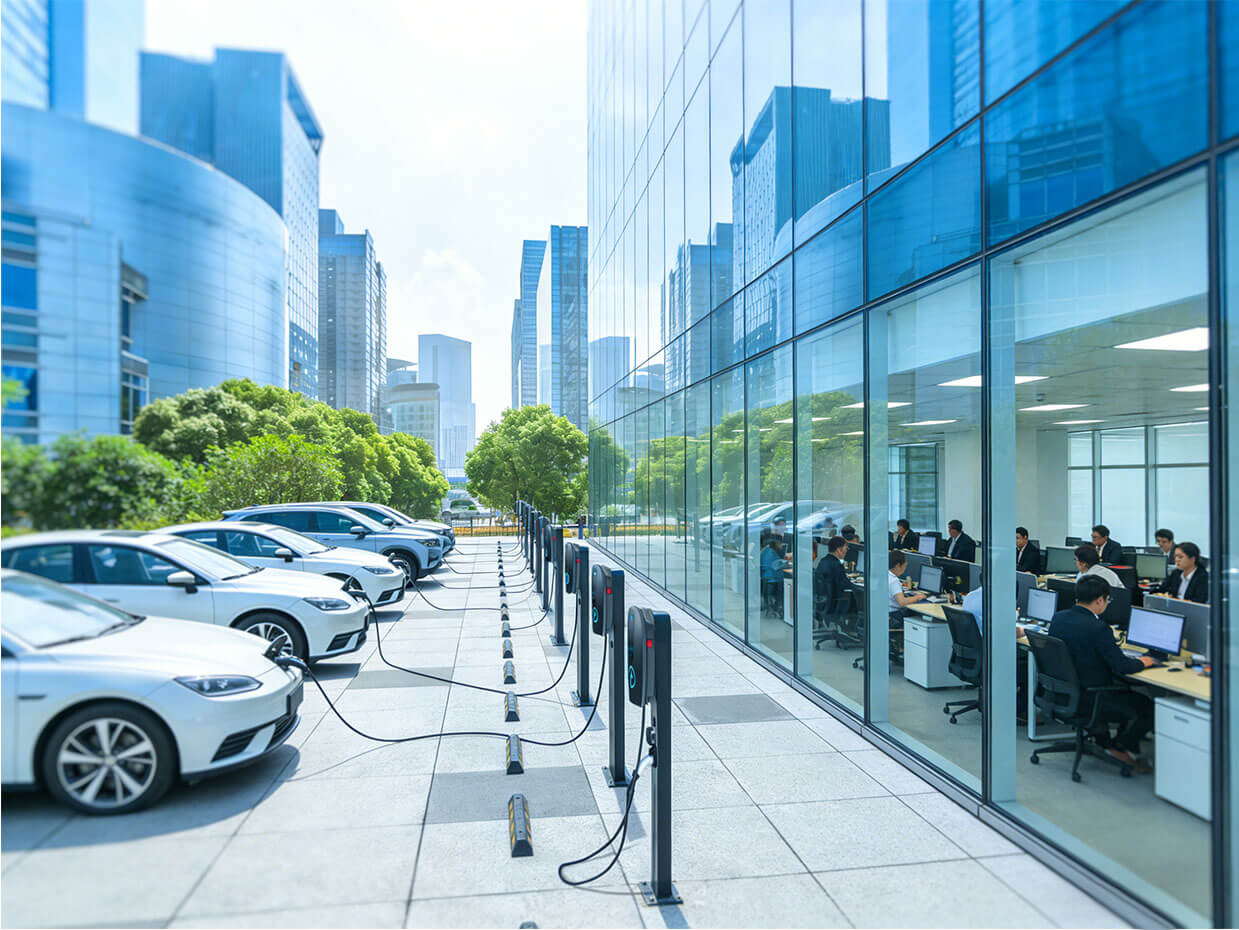
With the rapid popularization of electric vehicles, workplace EV chargers have transformed from a forward-looking benefit into a crucial component of corporate infrastructure. They not only enhance a company’s positive image of sustainability but also improve employee satisfaction and provide added value for visitors. For business owners, installing workplace chargers is a wise investment. This article, drawing on TKT’s industry experience, provides a comprehensive guide to workplace EV charging solutions.
I. Understanding Workplace Electric Vehicle Chargers
The Importance of Workplace Vehicle Chargers
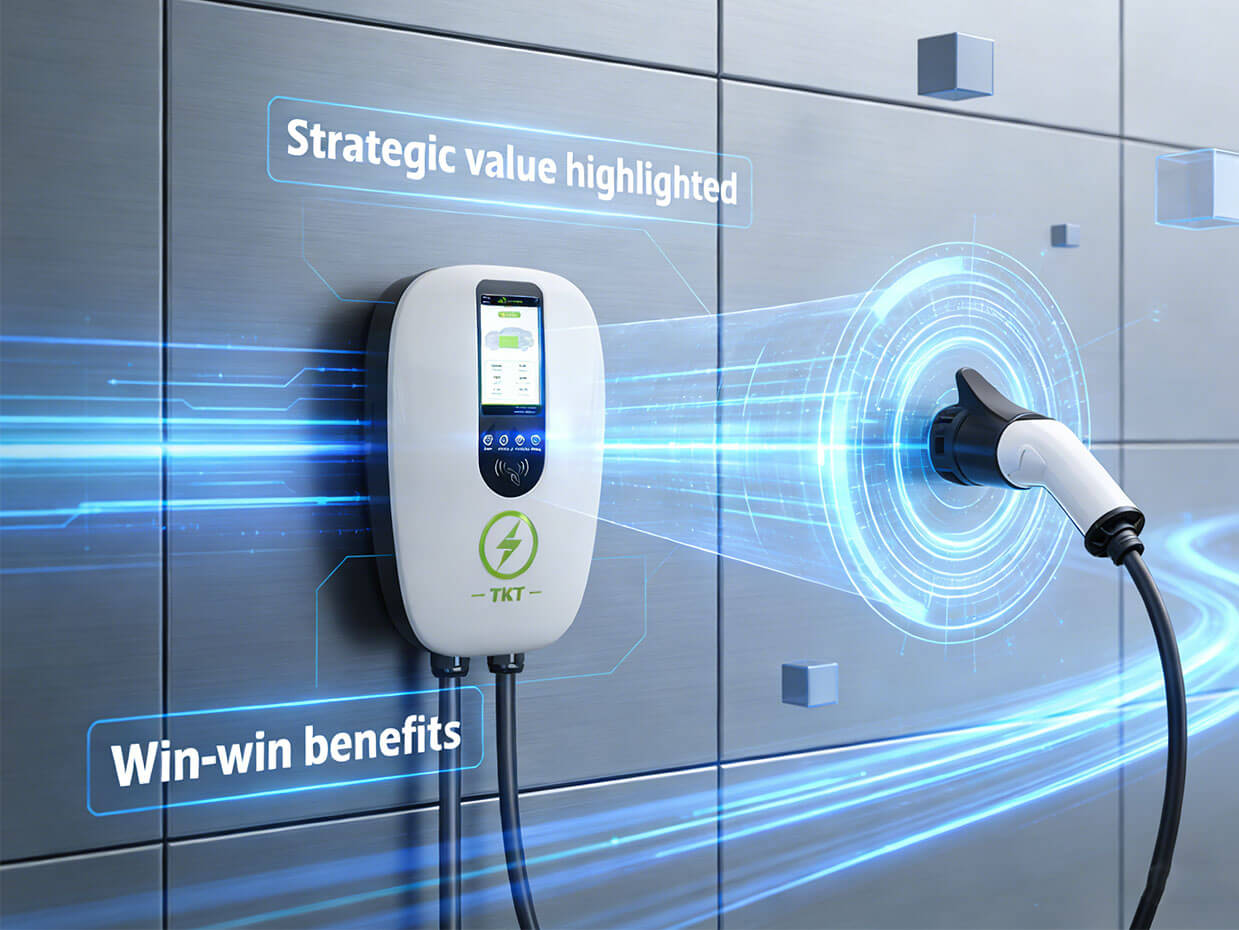
1. Strategic Value:
EV chargers for workplace are not only infrastructure but also demonstrate a company’s social responsibility and green development philosophy, enhancing its brand image and core competitiveness within the industry.
2. Win-Win Benefits for Employers and Employees:
For employers, deploying workplace EV chargers is a low-cost, high-return measure for attracting and retaining talent. In today’s increasingly competitive talent market, well-equipped charging facilities significantly increase a company’s attractiveness to employees who own new energy vehicles, reducing employee turnover. Furthermore, installing workplace chargers aligns with green office policies, and in some regions, companies can enjoy relevant subsidies, reducing operating costs.
For employees, the convenience of workplace EV chargers is self-evident. Employees can charge their vehicles during work hours, eliminating the need to detour to public charging stations during their commute, saving significant time and travel costs. Ek olarak, the convenient charging experience enhances employee job satisfaction and sense of belonging, boosting work enthusiasm and achieving a win-win situation for both the company and its employees.
Types of Workplace EV Charging Facilities
Workplace EV charging facilities are mainly divided into two types: commercial electric vehicle chargers for external use and chargers for employee personal use.
Commercial EV Chargers: These are primarily used by companies to provide charging services to the public, including nearby residents and passing vehicles, serving both internal and external profit-generating functions. These chargers typically use DC fast charging, with power outputs ranging from 60kW to 120kW. They feature dual charging ports and dynamic power allocation to improve charging efficiency and operational revenue. The system requires intelligent billing and remote monitoring systems, making them suitable for locations with high foot traffic, such as industrial parks and commercial complexes.
Employee Use Chargers: These are usually employee benefits, authorized for internal use, and typically activated via employee cards or an internal app. They aim to provide supplementary services to employees. These chargers mostly use AC slow charging mode, with power mainly at 7kW and 11kW. It is typically installed in company parking lots to charge employees’ daily commuting vehicles. It features low installation costs, high usage frequency, and easy management, requiring no additional billing system.
How to Choose the Best Electric Vehicle Charger for Your Workplace?
1. Reliability and Durability: Suitable for high-intensity, long-term continuous use environments.
2. Intelligent Management and Networking: Supports remote monitoring, access control (Örneğin., authorized employee use), load balancing (to avoid grid overload), vesaire.
3. Charging Power and Speed: Rationally configures AC slow charging or DC fast charging based on vehicle parking time (Örneğin., working hours).
4. Scalability and Flexibility: The charging network can be easily expanded as demand grows.
5. Safety Standards and Certifications: Complies with stringent local and international electrical safety standards.
II. Guide to End-to-End Workplace EV Charging Solutions
Deploying electric vehicle chargers in the workplace is not simply a matter of equipment installation. It involves multiple stages, including needs assessment, regulatory approval, solution design, product selection, and installation and commissioning.
1. Assessing Workplace Charging Needs
Needs assessment is the foundation of any workplace charging solution. TKT’s professional team provides survey methods, allowing businesses to comprehensively understand their actual situation, including parking lot area, number of parking spaces, number of employees owning new energy vehicles, average daily charging needs, and existing power distribution capacity. This avoids situations of “insufficient installation” veya “waste of resources,” providing a scientific basis for subsequent solution design and ensuring the rationality and forward-looking nature of the solution.
2. Understanding Local Regulations and Approvals
Workplace electric vehicle charger installation must comply with relevant local regulations and policies. Approval processes and subsidy policies vary across different regions, and violations may result in penalties. You need to contact the relevant local departments as soon as possible.
3. Solution Design
Solution design is the core stage. TKT will create a customized solution design based on the needs assessment results and the company’s actual scenario. The program covers two core areas: First, power distribution system design. TKT’s professional electrical engineers will design a reasonable power expansion plan that integrates with the company’s existing power distribution system, ensuring that charging facilities do not interfere with the company’s office power supply. Eşzamanlı, they will optimize the wiring layout, reduce line losses, and improve power safety. Second, supporting facility design, including charger installation location planning, protective canopy construction, lighting facilities, drainage facilities, and monitoring facilities.
4. EV Charger Selection
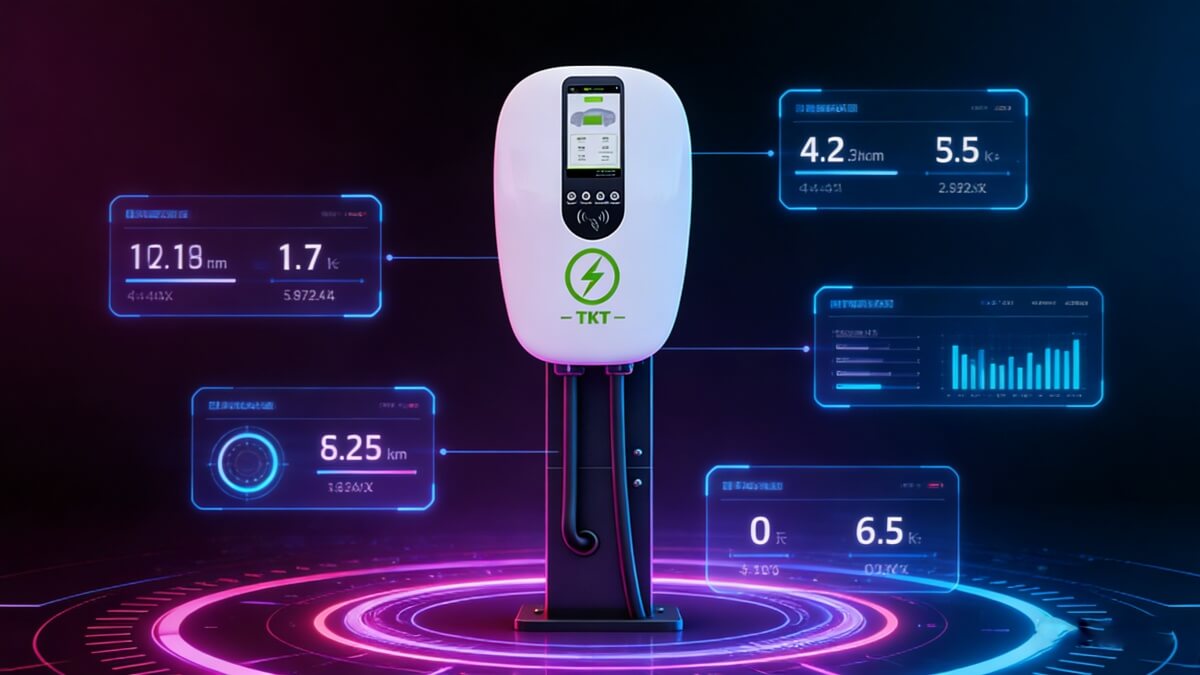
The choice of EV charger directly impacts the subsequent user experience and operating costs. Leveraging its resource advantages, TKT offers a wide range of products, including AC slow chargers and DC fast chargers, to meet the diverse needs of different businesses. All products are certified and feature safety, stability, yeterlik, and durability, while also being intelligent and cost-effective. TKT’s professional team will recommend the most suitable product based on the company’s needs and budget, avoiding blind selection.
5. Installing EV Chargers in the Workplace
Due to the vastness of the world, TKT cannot currently provide installation services in all regions, but we can assist in finding local installation service providers. We will provide detailed parameters and requirements and collaborate with the installer to complete the solution.
6. Acceptance and Commissioning
After installation, TKT professionals will conduct a comprehensive remote acceptance and commissioning process to ensure the charging facility operates normally. The acceptance phase mainly includes equipment appearance inspection, wiring testing, and power distribution system testing. The commissioning phase mainly includes charging tests, intelligent function tests, and billing system tests. Afterwards, we will simulate real-world usage scenarios to identify potential equipment malfunctions and ensure stable charging, normal functioning, and accurate billing. Only after successful acceptance and commissioning will the equipment be delivered to the enterprise for use, and a detailed acceptance report will be provided to the enterprise.
III. Düzenli bakım: Extending Equipment Lifespan
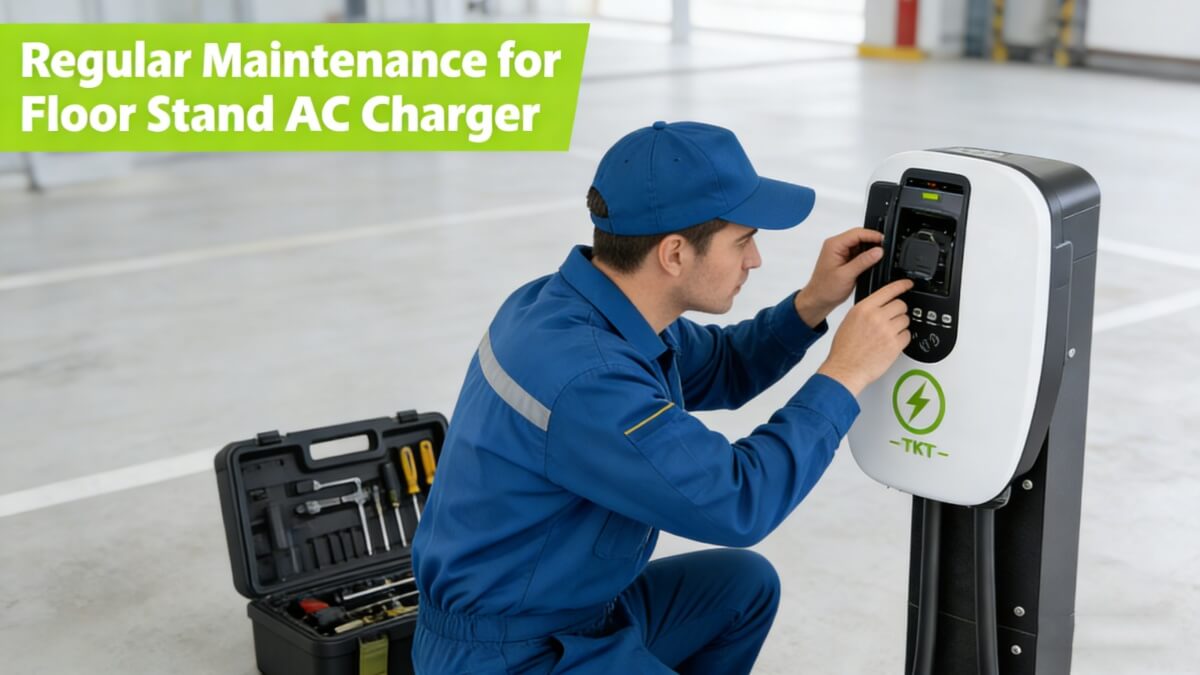
As long-term infrastructure, workplace electric vehicle chargers require regular maintenance to ensure stable operation, extend their lifespan, and mitigate safety hazards. Many businesses, after installing chargers, lack professional maintenance, leading to untimely troubleshooting of equipment malfunctions, impacting user experience, and even causing safety risks. TKT can develop customized maintenance plans for businesses. If a professional electrician is unavailable, it is recommended to choose a local installer who provides maintenance services.
Maintenance services mainly consist of two parts: daily inspections and periodic maintenance. Daily inspections are conducted regularly by professional electricians who check the charger’s operating status, wiring connections, safety devices, vesaire., identify potential faults, and promptly clean dust and debris from the equipment surface to ensure normal operation. Periodic maintenance involves comprehensive testing and maintenance of the charger’s core components, power distribution system, and intelligent system based on usage time and operating conditions. This includes component replacement, software upgrades, and circuit optimization. Detailed maintenance records are also kept, forming a maintenance report that allows businesses to clearly understand the equipment’s operating status.
IV. TKT Hakkında
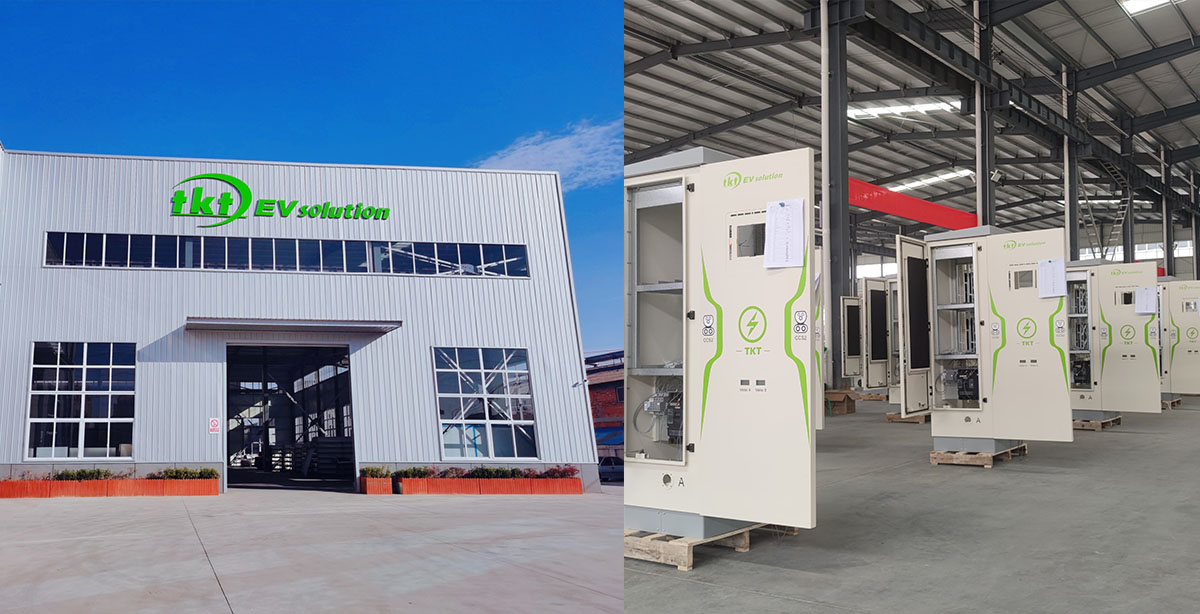
TKT Grubu 1998. The Charger Project Department was established in 2014, with a total investment of 200 million RMB and a factory area of 8,200 square meters. It independently designs, researches, and manufactures charger equipment, including AC and DC chargers. It is a high-tech enterprise in Luoyang. For many years, TKT has focused on in-depth development in the electric vehicle charging field, winning the trust of Fortune 500 automakers BYD and TATA with its high-quality products and excellent service.
In the future, TKT will continue to rely on technological innovation and service upgrades to continuously optimize its product system and solutions, improve product quality and service levels, and provide more enterprises with higher-quality, more convenient, and more cost-effective charging products, helping them practice the concept of green development.
Browse more news: Understanding Government Public EV Charger, Customized EV Charging Solutions for Automakers, Fleet Charging Technology Guide
Facebook: https://www.facebook.com/TKTHVAC/
LinkedIn: https://www.linkedin.com/company/tkt-hvac
Youtube: https://www.youtube.com/@TKTHVAC