Split EV Charger | 360kW-800kW

Split EV Charger

New Split EV Charger

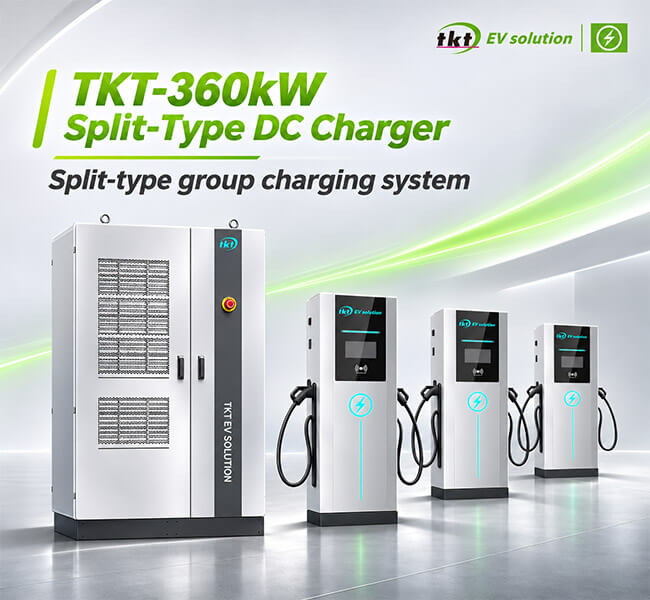
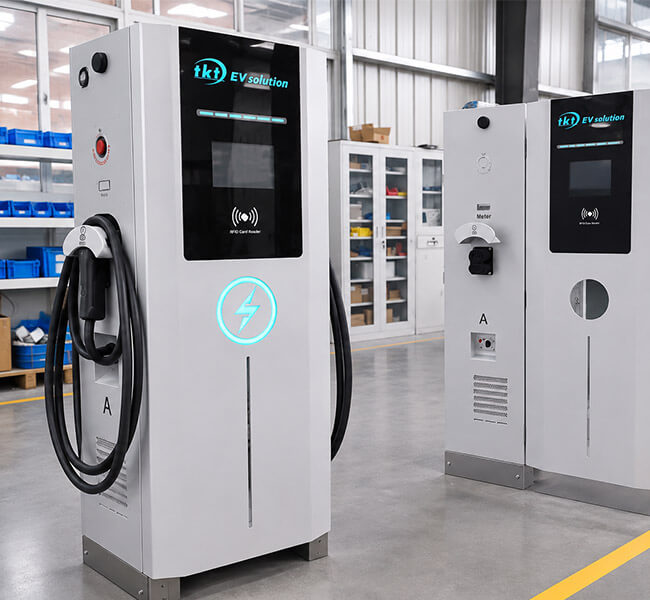
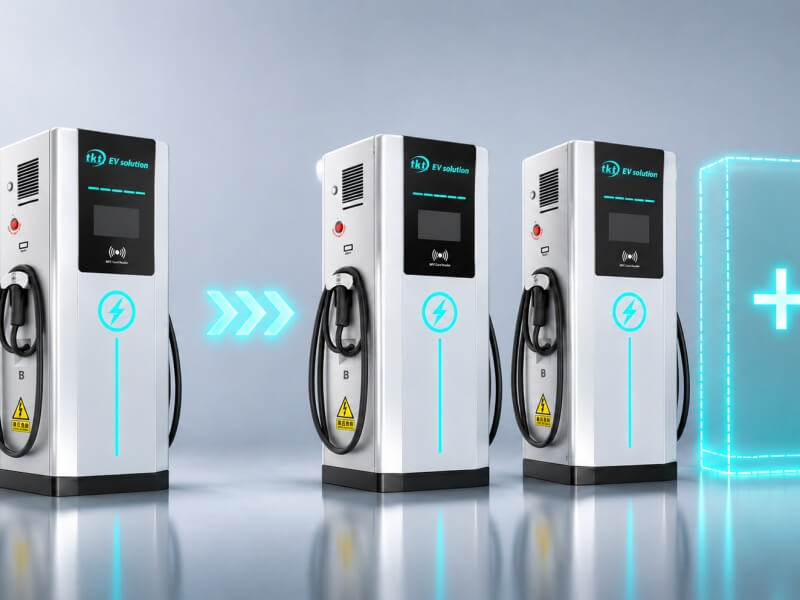
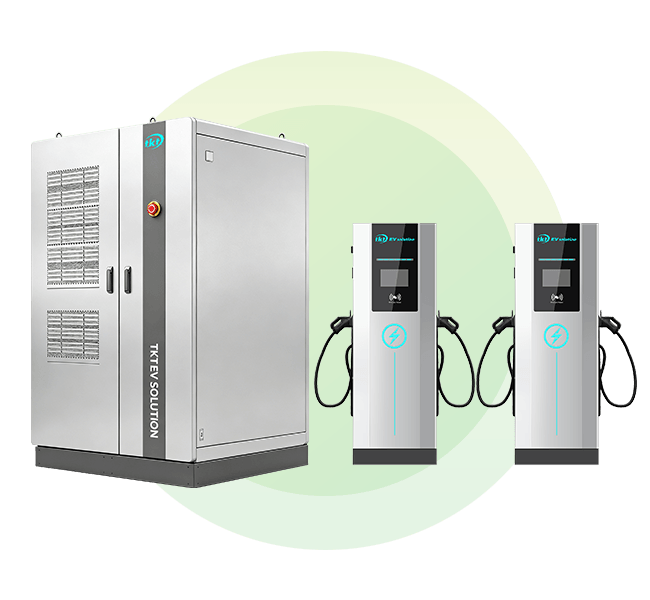
Split EV Charger is TKT’s latest charging solution, compatible with more charging ports. It employs a matrix power distribution scheme to maximize charging power utilization.

– Выходной рейтинг: 360кВт / 400кВт / 720кВт / 800кВт
– Требуемое напряжение: 3-фаза 400 В±15 % переменного тока
– Преимущества: More flexible charging power allocation, more flexible deployment, and greater expansion potential, и т. д..

Inquiry Now

New Split EV Charger Solution

What is a Split EV Charger?

A Split EV Charger is a DC charging architecture that separates the high-power, heat-generating power conversion components of the charging equipment from the user-operated charging terminals. It enables EV charging solutions with one main cabinet and multiple charging ports, and improves overall efficiency through dynamic power allocation. Simply put, it uses a combination of “one main power cabinet + multiple split charging terminals.” This architecture is also known as centralized power distribution or an EV charging split system.

Worth the wait: our video will play shortly.

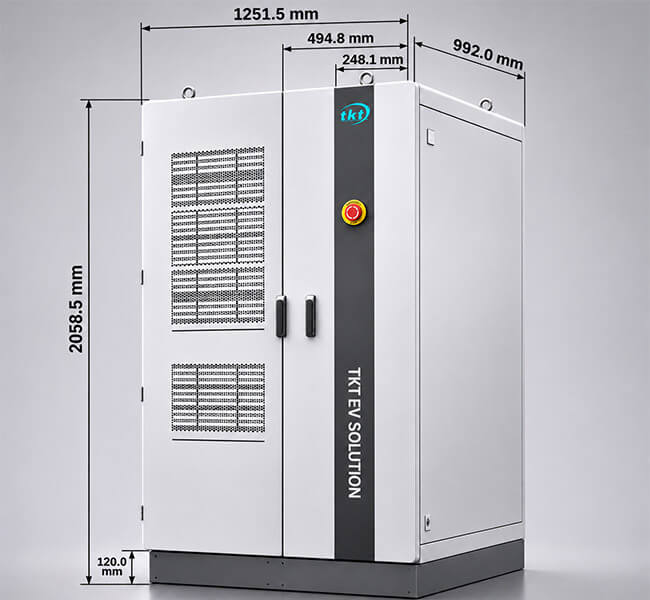
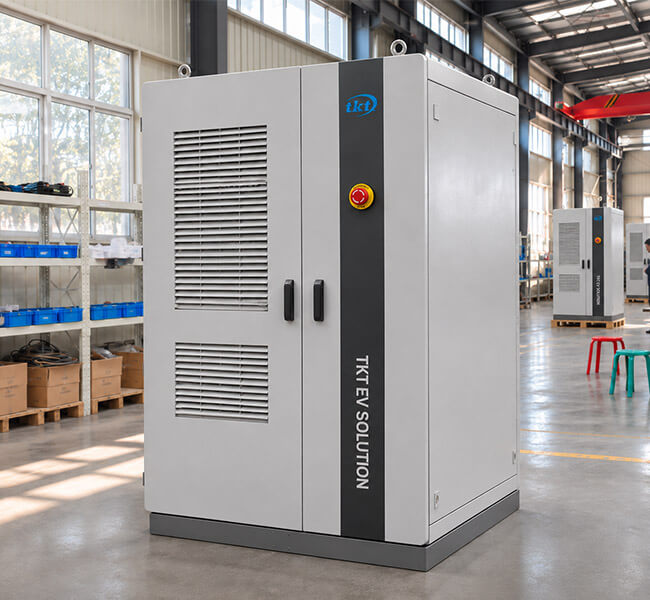
Main Power Cabinet:

Concentrates power modules, rectifier modules, control units, and power distribution units. Its function is to convert the AC power input from the grid into DC power suitable for charging electric vehicle batteries.

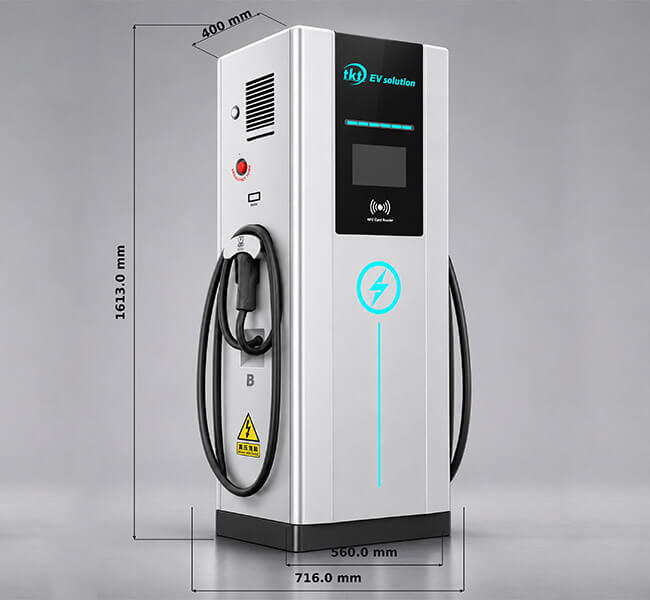
Split Charging Terminals:

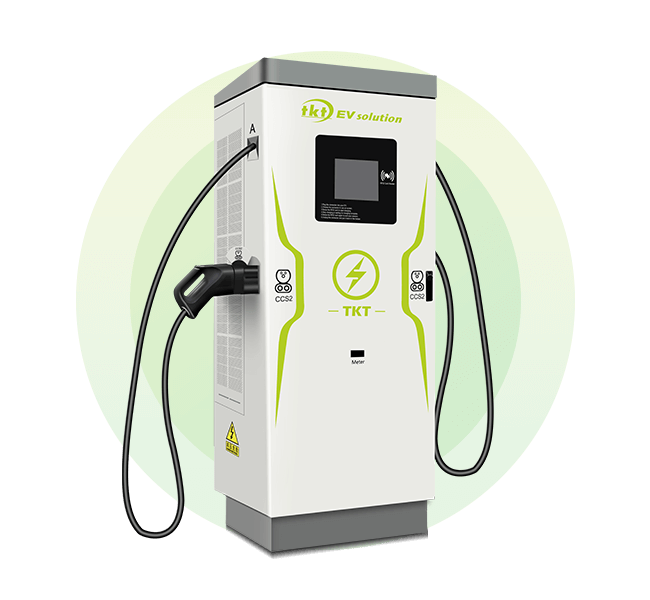
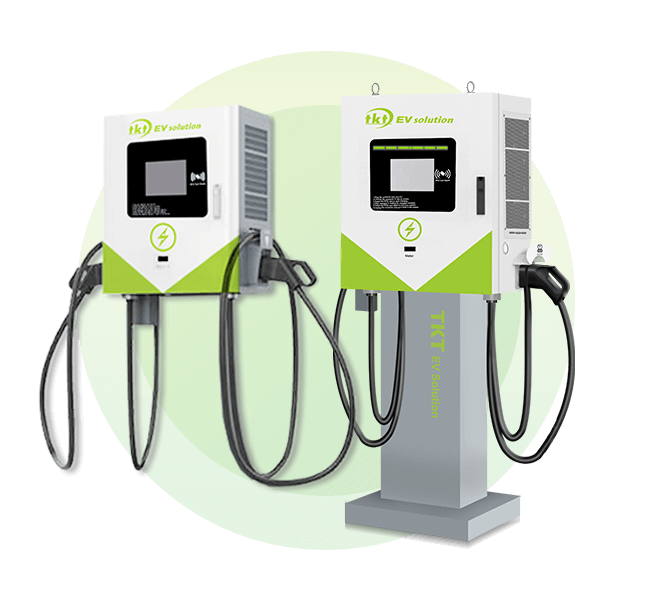
Installed in different parking spaces, providing multiple charging ports, displays, and user interfaces. These are the devices that users operate and complete the vehicle charging process.

The biggest difference between it and a traditional DC charger:

Simply put, a traditional charger uses only its own charging module per device, while a split system allows multiple charging terminals to share all the charging modules in a single main power cabinet.

What are the advantages of a split EV charger?

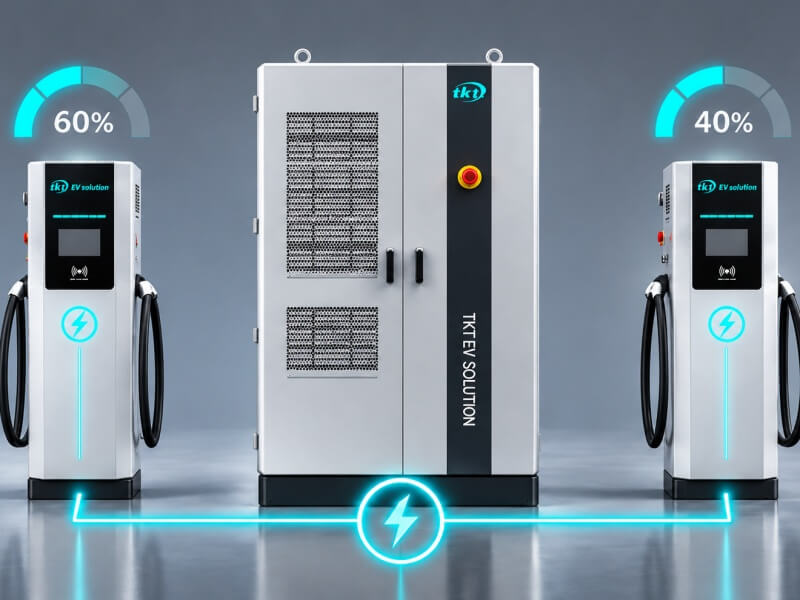
Power sharing

① Power sharing, improving equipment utilization

A split EV charging system allows multiple charging terminals to share the total power of the main power cabinet. When multiple vehicles are charging simultaneously, the system dynamically adjusts the power according to the actual charging needs of each vehicle, resulting in more rational power allocation rather than each charging terminal occupying a fixed amount of power. This architecture effectively avoids power idleness or waste.

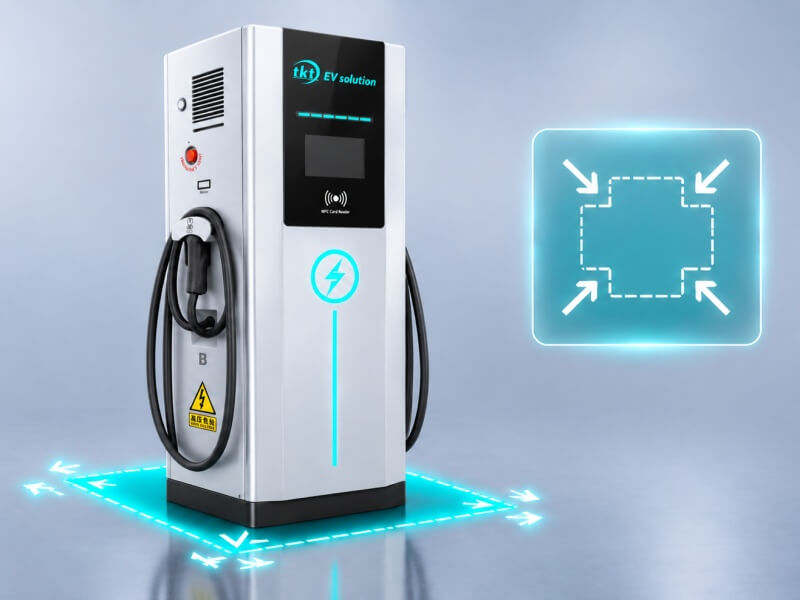
② Reduced equipment footprint, optimizing site layout

A split system allows large power cabinets to be centrally installed in the equipment area or near the power distribution room, while smaller charging terminals are installed in various parking spaces.

Reduced footprint
Modular design

③ Modular design, facilitating future expansion

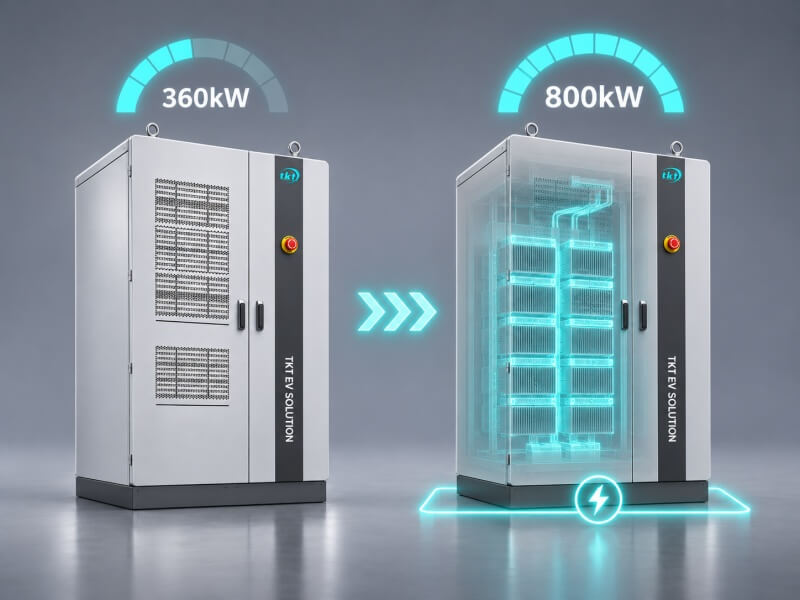
The main power cabinet typically doesn’t need to consider installation location, so its size can be designed to be larger. Combined with a modular design, there is ample space for future expansion. The TKT solution currently supports expansion up to 800kW.

Initially, when the charging demand at the site is low, fewer power modules can be configured to reduce costs. As the number of vehicles increases, more charging modules can be added to improve charging efficiency.

④ Supports multiple charging terminal combinations

No longer limited to two charging ports, more independent charging terminals can be added according to the customer’s actual usage scenarios. Up to 12 charging ports are supported.

Multiple charging combinations

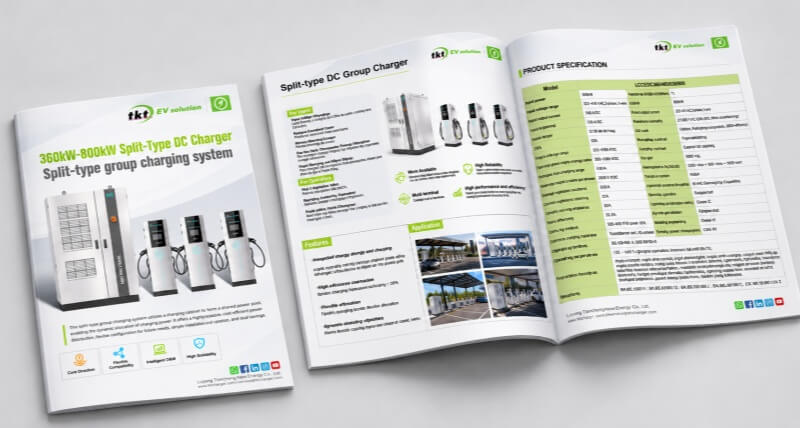
TKT Split DC EV Charger Specifications

Власть360kW/400kW/720kW/800kW
Входной рейтинг3-фаза 400 В±15 % переменного тока
Выходные разъемыCCS, ЧАдеМО, ГБ/Т
Maximum number of charging ports12
Подключение к сети4Г/Ethernet
Протоколы связиOCPP1.6J
СертификатEN IEC 61851-1; EN IEC 61851-23 ; EN IEC 62196-1; EN IEC 62196-3; EN IEC 61851-21-2, и т. д..

Get Detailed Information

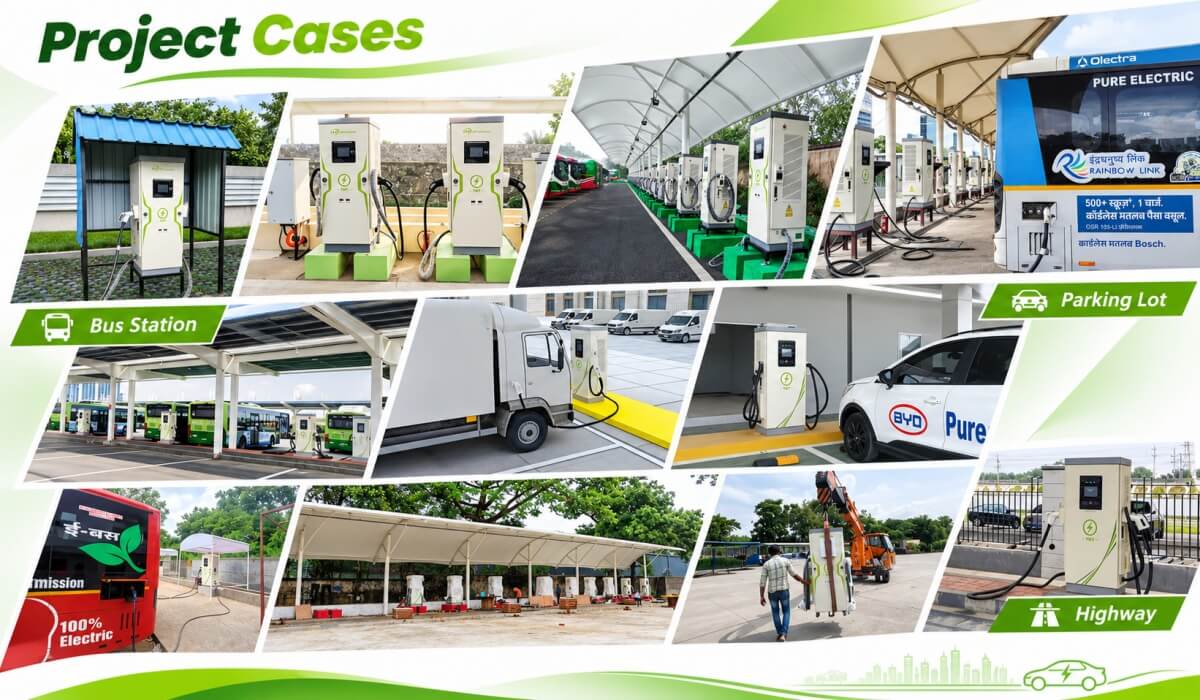
Чехлы для зарядных станций TKT Fast EV

TKT занимается разработкой и производством зарядных устройств для электромобилей. 10 годы. Продукция экспортируется более чем в 50 страны и регионы по всему миру. Продукция протестирована на рынке.. Вы можете быть полностью уверены.

Новая зарядная станция для электромобилей широко используется. Может применяться в коммерческих автопарках., автобусные станции, зоны дорожного обслуживания, профессиональные зарядные станции и т. д..

ev charging station cases

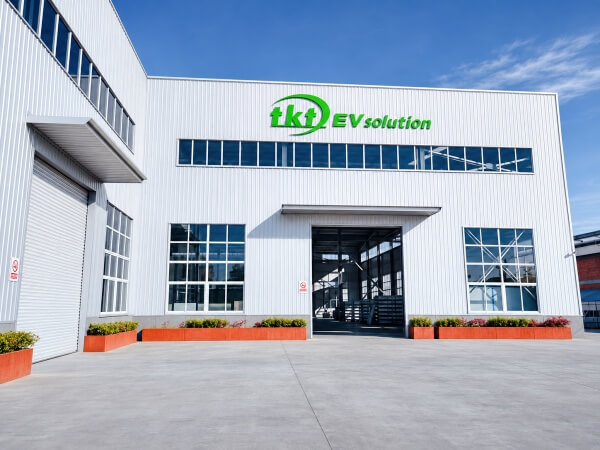
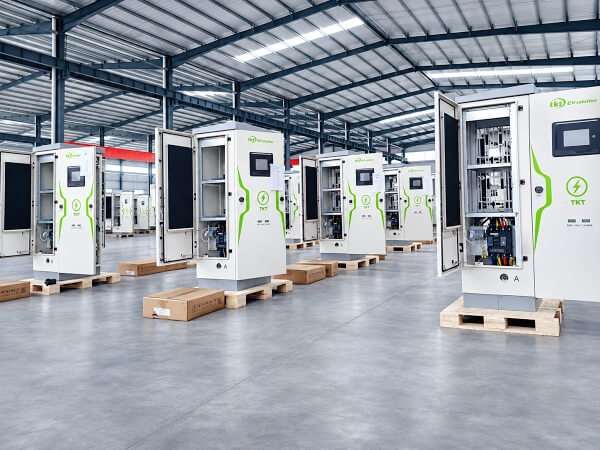
ТКТ Модерн Фабрика

tkt factory
ev charging line

What is the working principle of an EV charging split system?

Its working principle can be summarized as centralized rectification and conversion, distributed DC output, and intelligent dynamic scheduling.

1. Centralized Rectification and Conversion: The grid provides three-phase AC power, which enters the main cabinet. The centralized charging modules within the cabinet convert the AC power into high-voltage DC power, forming a common DC power pool.

2. Distributed DC Output: The electrical energy from the DC power pool is flexibly output to various charging terminals through power distribution units composed of a matrix of Power Distribution Units.

3. Intelligent Dynamic Scheduling: The EV charging split system reads the charging requirements sent by the BMS (Battery Management System) of each connected vehicle in real time, and then dynamically switches charging modules and distribution paths to accurately deliver power to the vehicles that need it most, achieving maximum utilization.

What are the best use cases for Split EV Chargers?

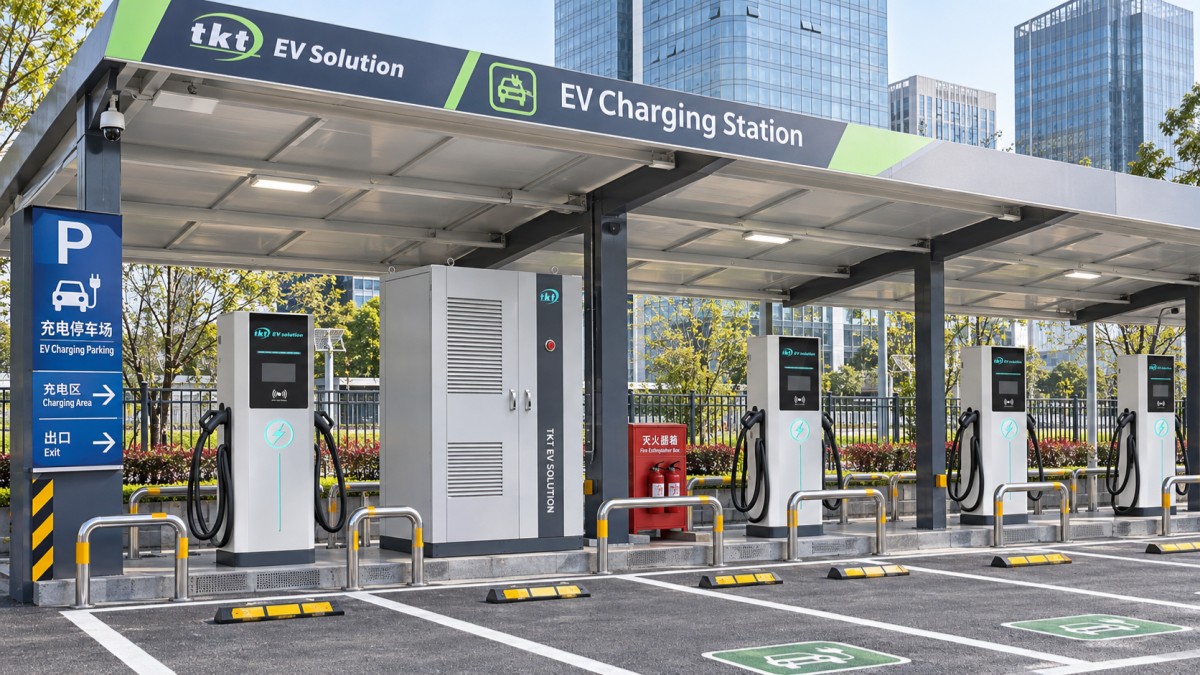
EV charging split systems are best suited for commercial charging stations with multiple charging spaces, high vehicle turnover rates, and future expansion needs.

1. Public Fast Charging Stations:

Multiple parking spaces simultaneously provide DC fast charging services. Centralized power cabinets can uniformly allocate power, improving overall equipment utilization, making them suitable for urban public charging stations and large commercial parking lots.

2. Logistics Parks and Heavy Truck Charging Stations

These scenarios typically have a large number of charging vehicles, some requiring high-power supercharging while others only need regular fast charging. Split architecture facilitates mixed deployment and flexible scheduling.

3. Highway Service Areas

Vehicle charging situations are complex, with significant fluctuations in charging demand. Multiple charging terminals sharing power resources help address complex charging needs.

Split EV Charging station

TKT Split EV Charger FAQs

EV Split Charger vs. traditional DC EV charger

The core difference lies in the fixed versus shared charging power.

EV charging split systems offer higher initial investment in exchange for higher power utilization, flexibility, and long-term upgrade potential. This efficiency translates to serving more vehicles and increasing the average charging volume per device within the same timeframe, thereby increasing operating revenue. This charging solution also significantly improves user satisfaction, especially for those requiring fast charging. Furthermore, it offers greater upgrade potential and relatively lower costs when power upgrades are needed later.

Traditional DC chargers, on the other hand, are low-cost, standardized solutions.

Comparison ItemsTraditional DC ChargerEV Split Charger
Equipment StructureCharging modules and charging terminals are integrated into one cabinet.Power cabinets and charging terminals are separate.
Charging portTypically dual-portCan connect multiple dual-port devices
Power AllocationFixed allocation, typically evenly distributed.Flexible allocation across multiple terminals, flowing as needed.
Installation MethodsEach charging device is installed independentlyThe main cabinet is centrally installed, while the terminals are installed separately
Space RequirementsEach device requires a full server rack.The terminal next to the parking space is relatively small.
Expansion CapacitySituations vary; some areas can be expanded appropriately, while others cannot.Usually, there is always room for expansion.
Initial CostLower cost, more economical for small-scale sites with fixed power requirements.Typically higher for the same total power. Однако, it typically completes more charging orders within the same timeframe and has greater scalability.

How many charging terminals can a single main power cabinet connect to at most?

TKT’s split EV charging solution supports a maximum of 12 charging terminals, but this will be determined based on actual charging conditions; more is not necessarily better.

Does the EV charging split system support dynamic power allocation?

Yes, this is a core function of many high-end split systems. The system can adjust the power of different charging terminals in real time based on the charging demand provided by the vehicle’s BMS, the vehicle’s SOC, the operating status of each terminal, and the remaining power of the main cabinet. When the charging demand of a vehicle decreases or charging is completed, the system can redistribute the released power to other vehicles, thereby improving overall power utilization.

If one charging terminal malfunctions, will the other terminals still function normally?

Generally, if the fault only occurs in a single terminal, the system can isolate the faulty branch through an isolation mechanism, allowing other normal terminals to continue operating. Однако, if the fault occurs in the main power cabinet or the core power distribution unit, it may affect all charging terminals.

Can charging terminals be added or the main cabinet power upgraded in the future?

Yes, but it needs to meet the power requirements for equipment expansion, и т. д..

Are separate chargers always faster than integrated chargers?

Under the same power output, a vehicle’s peak charging speed depends on the terminal’s rated power and the vehicle’s maximum charging capacity. If all vehicles can accept the power, the charging speed for a single vehicle will be the same. Однако, when multiple vehicles are charging simultaneously, a separate charger’s dynamic power allocation allows each vehicle to receive a more reasonable power. The overall power consumption of the charging station is the highest, essentially operating at full capacity, thus maximizing vehicle turnover.

Больше продуктов для зарядных станций для электромобилей

    Свяжитесь с нами, чтобы узнать, как мы можем поддержать ваш проект.

    We respect your confidentiality and all information are protected.

      Свяжитесь с нами, чтобы узнать, как мы можем поддержать ваш проект.

      We respect your confidentiality and all information are protected.

      Contact Us For Professional Assistance!!

      电子邮件

      Подписаться!